
The 21 Classes of Achaea
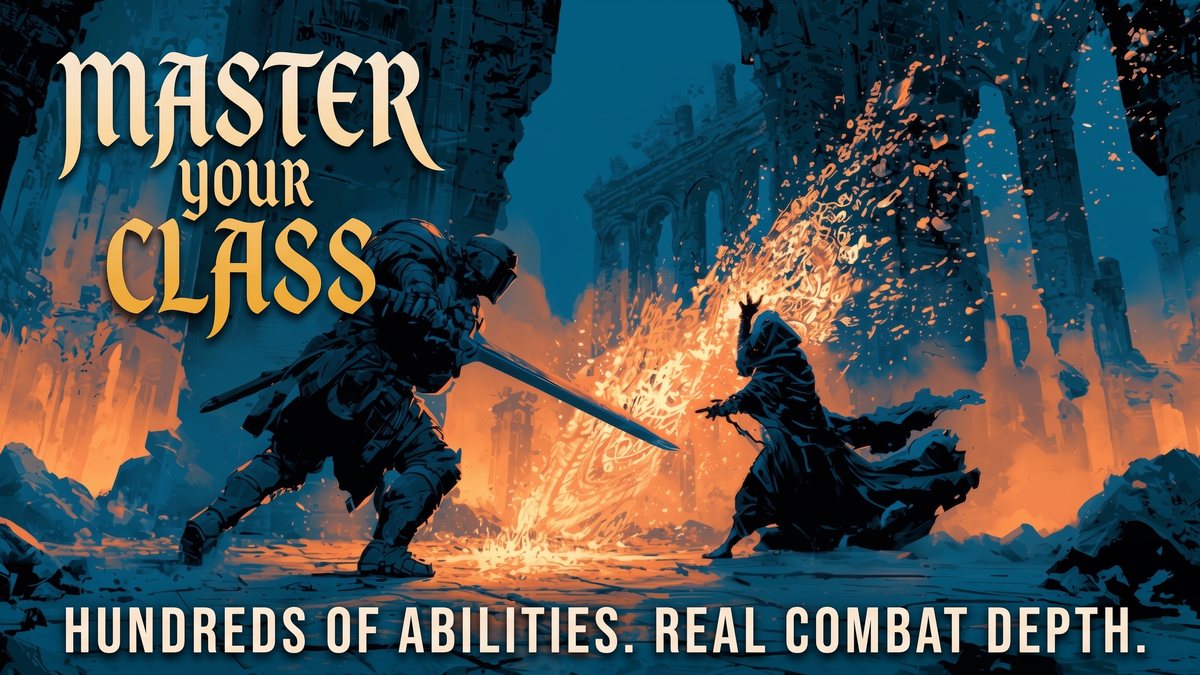
Achaea has 21 playable classes. Some you’ll recognise: holy knights, shapeshifting druids, hooded assassins. Others are stranger: a body-horror abomination that grows extra mouths and tentacles, a court jester who fights with magical puppets and concealed bombs, a plague-spreading outcast who cheats death itself.
Every class has three skill sets and dozens of abilities per set. Most classes carry well over 100 class abilities once fully learned, plus access to non-class skills shared across everyone. The depth is incredible; a serious Achaea combatant is typically managing a complex affliction-cure exchange across hundreds of named abilities in real time.
Class is the second decision you make about your character, after race. Unlike race, your class shapes nearly everything about how you actually play: the rhythm of your combat, the Houses willing to take you, the city you’ll most likely settle in, and the alignment you’ll be expected (though not forced) to roleplay. Below are all 21, grouped into six archetypes.
Why your class choice matters
Your class is the longest-running choice you’ll make in Achaea. It governs your combat, your Houses, and often your political alignment.
What class actually changes:
- How you fight. Each class has three skill sets with 20-50 abilities each. The way a Serpent stacks venoms is nothing like the way a Druid shapeshifts into a wyvern. Combat identity follows class.
- Which Houses will accept you. Houses are Achaea’s guilds. Each one has a class whitelist. Your class determines which Houses you can join, and your House shapes which city you’ll settle in.
- Your alignment, sometimes. A handful of classes are factional: Paladin and Priest are bound to Targossas and the Bloodsworn Divine, Infernal and Apostate to Mhaldor and Evil, Druid and Sentinel and Sylvan to Eleusis and Nature. If you act against the faction, the class can excommunicate you and revoke part of your skills. The other classes are unrestricted and welcome in most cities.
- What people expect from you. Other players read class through years of accumulated roleplay context. A Bard walking into a tavern is read differently than a Pariah walking into the same tavern.
What class doesn’t change: your race. Any race can play any class.
The simplest way to think about it: race is who you were born; class is what you trained to become. You can reincarnate your race for free once, but changing your class is harder and meaningfully more expensive. Take the class decision seriously.
The 21 classes of Sapience
The 21 classes group into six archetypes. Within each archetype, the differences are significant. A Druid and a Sentinel are both forestal classes, but one transforms into bears and wyverns while the other fights alongside bonded animal companions using traps and skirmishing. Use the archetypes as a starting point, then read the spoke pages for the specifics.
Warriors
Six classes built around martial skill and physical combat. All but two use the shared Weaponmastery skill, which lets a warrior specialise in two-handed weapons, sword and shield, dual cutting, or dual blunt.
Paladin
A chivalrous knight bound to Targossas, fighting with melee weapons and a companion golden eagle. The eagle scouts, tracks fleeing enemies, and strikes from above. Paladin skills are Valour, Excision, and Weaponmastery. Factional: a Paladin who turns against Targossas can be excommunicated and lose Excision.
Runewarden
A disciplined knight who inscribes arcane runes onto blades, totems, and armour. Runewardens use Runelore, Discipline, and Weaponmastery, and are welcome in most cities since the class isn’t bound to any ethos. One of the more approachable warrior classes for a new player.
Blademaster
An agile swordsman who forges a uniquely named blade and masters the Two Arts: the Draw Art and the Blade Art. Each strike is a sword drawn and resheathed. Skills are TwoArts, Striking, and Shindo. Identity is built around mastering a single personal weapon and the rhythm of combat.
Infernal
The iron arm of Mhaldor, clad in hell-forged steel and serving Evil. Skills are Malignity, Weaponmastery, and Oppression. Note that in 837 AF, the Infernal class cast aside Necromancy in favour of Oppression. Factional: act against Evil or Mhaldor and your hell-forged weapons stop working.
Apostate
A diabolic scholar and ritualist serving Evil. Where the Infernal is a warrior first, the Apostate is a dark priest who can fight. Skills are Apostasy, Necromancy, and Evileye. Summons daemonic entities, drains life essence, and can guard their own soul from death itself. Factional to Mhaldor.
Unnamable
A body-horror abomination aligned with Ashtan and Chaos. Skills are Anathema, Weaponmastery, and Dominion. Anathema involves physical mutation: extra mouths, eyes, tentacles, tumour-based attacks. The flavour is uncompromising. One of the most unusual combat identities in Achaea.

Mages and Elementalists
Four classes that wield arcane, elemental, and dimensional power. Combat leans toward ranged afflictions and elemental devastation.
Magi
Wielders of elemental force and crystalline vibration. Skills are Elementalism, Crystalism, and Artificing. Craft their staff through Artificing, summon and command elemental creatures, and devastate at range. One of the oldest combat magic traditions in the game.
Alchemist
A class built around manipulating the four humours and transmuting matter. Skills are Alchemy, Physiology, and Formulation. An Alchemist can inflict illness via the humours, command a homunculus made from their own flesh, and amalgamate potent compounds. Hashan-aligned Alchemists can swap Formulation for Sublimation, a wholly different field.
Psion
A wielder of the lost magic of the Aldar, drawn from the well at the heart of ancient Nur. Skills are Weaving, Emulation, and Psionics. Weaving conjures weapons from nothing; Psionics is said to let masters pierce time’s veil. Predates most other forms of combat magic in the game’s lore.
Occultist
A summoner of Chaos entities and a manipulator of karma. Skills are Occultism, Domination, and Tarot. Pacts with the Chaos Lords, inscribes mystical Tarot cards for healing or travel, slows time itself. Bound to Ashtan and Chaos; act against Chaos and the Chaos Lords stop answering.

Forestals
Three classes connected to the natural world. All three are aligned with Eleusis and the forest commune. Forestal classes are mutually exclusive with the Alchemist class at the city level.
Druid
The most ancient of the forestal classes, devoted to the forests and all they represent. Skills are Groves, Metamorphosis, and Reclamation. A Druid can establish a personal Grove and reign supreme within it, transform into animals from squirrel to wyvern, and accelerate the growth of natural life. Factional to Nature.
Sentinel
A forestal warrior who travels with animal companions and lays cunning traps. Skills are Woodlore, Metamorphosis, and Skirmishing. Where the Druid becomes the animal, the Sentinel works alongside them. Unsurpassed with a handaxe, trident, or spear. Factional to Nature.
Sylvan
Founded in modern times by those who drew on both Druid and Magi knowledge. Skills are Groves, Propagation, and Weatherweaving. Sylvans share the Grove with Druids, but their signature is Propagation: transforming into a Viridian, a living being of the forest. Factional to Nature.

Rogues and Subterfuge
Three classes that operate in shadow, manipulation, and deception. Combat tends toward setup, control, and precision over direct confrontation.
Serpent
A stealth specialist descended from the serpent-strain of humanity. Skills are Subterfuge, Hypnosis, and Venom. Fights with whip and dirk or bare fangs, applies dozens of venoms in precise timing sequences, plants hypnotic suggestions, and travels through a network of wormholes. One of the most mechanically demanding classes in Achaea.
Jester
A class that weaponises absurdity. Skills are Pranks, Puppetry, and Tarot. Acrobatic backflips that become evasions, jack-in-the-boxes with deadly surprises, balloons that lift opponents skyward, and magical puppets that manipulate others to lethal ends. Founded in 299 AF when an anomalous timequake brought Silvestri Carnivalis forward in time.
Depthswalker
A shadowy manipulator of time, the class gifted to Achaea by ex-Tenith’oru in a poignant act of loss and spite. Skills are Aeonics, Shadowmancy, and Terminus. Capable of altering time to affect the world around them. Among the more recent classes added to the game.
Holy and Spiritual
Three classes built around devotion, curses, and divine or spiritual forces.
Priest
A healer and devotion fighter who summons a guardian angel that can burn enemies, trace their movements, or tear out their souls. Skills are Spirituality, Devotion, and Zeal. Bound to Targossas and the Bloodsworn Divine. A Priest who strays from the path loses Devotion.
Shaman
A reclusive ritualist who hexes opponents with debilitating curses and crafts Vodun dolls to control them from afar. Skills are Vodun, Curses, and Spiritlore. Once a Shaman has a full likeness of you, they can break limbs, cause bleeding, paralyse, even leech experience from a distance. Not bound to any ethos, but typically found in Hashan.
Pariah
Named Accursed by the Hatun of Ghezavat. Skills are Memorium, Pestilence, and Charnel. The grave is their domain. Pestilence brings swarm and sickness. Memorium inscribes deadly blood-and-air logographs. Charnel masters the end itself. Society shuns the Pariah, and the feeling is mutual. One of the newer additions to the class roster.
Performance and Discipline
Two classes that find power in disciplined practice rather than martial or magical traditions.
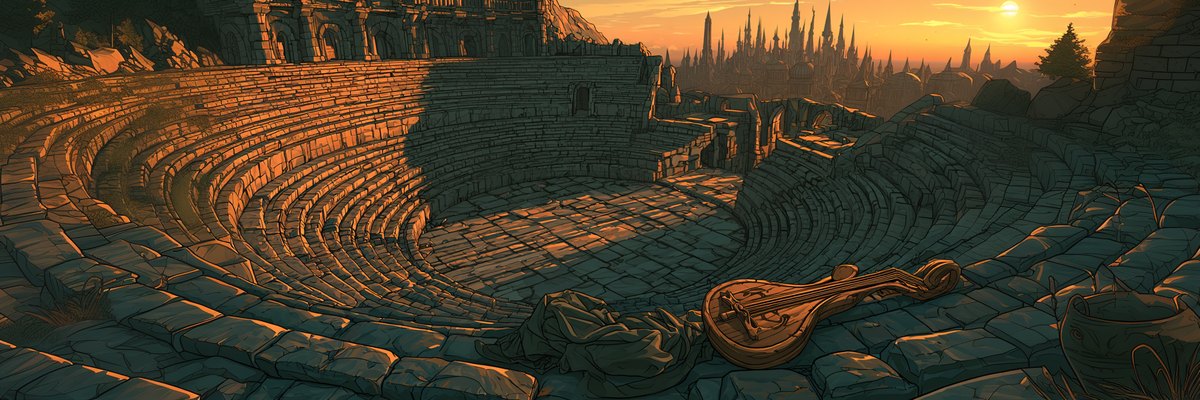
Bard
A troubadour refined by the Great Bard in 949 AF into a keeper of legacy. Skills are Bladedance, Composition, and Sagas. Wields a rapier and bladesong, composes works that bolster allies and devastate foes, recites the great Sagas of the modern age. Cyrene’s Bards alone may recite Woe, the singular epic of Black Pazuzu, Prince of Woe.
Monk
A martial artist who unifies mind, body, and spirit through discipline. Skills are Tekura, Telepathy, and Kaido. Tekura is the unarmed art forged by the Grandmaster of Flowers when his order was stripped of weapons. Monks who reach transcendence in Tekura can pursue Shikudo, the art of the staff. The Sentaari House traces its lineage to this same monastery.
Achaea class alignments at a glance
Some classes are factional, meaning they require active roleplay with their associated city and alignment. If you stop meeting that roleplay requirement, the class can be taken away. Open classes have broader House and city options.
| Class | Archetype | Alignment | City | Factional |
|---|---|---|---|---|
| Paladin | Warrior | Good | Targossas | Yes |
| Runewarden | Warrior | Any | Open | No |
| Blademaster | Warrior | Any | Open | No |
| Infernal | Warrior | Evil | Mhaldor | Yes |
| Apostate | Warrior | Evil | Mhaldor | Yes |
| Unnamable | Warrior | Chaos | Ashtan | Yes |
| Magi | Mage | Any | Open | No |
| Alchemist | Mage | Any | Open | No |
| Psion | Mage | Any | Open | No |
| Occultist | Mage | Chaos | Ashtan | Yes |
| Druid | Forestal | Nature | Eleusis | Yes |
| Sentinel | Forestal | Nature | Eleusis | Yes |
| Sylvan | Forestal | Nature | Eleusis | Yes |
| Serpent | Rogue | Any | Open | No |
| Jester | Rogue | Any | Open | No |
| Depthswalker | Rogue | Any | Open | No |
| Priest | Holy | Good | Targossas | Yes |
| Shaman | Holy | Any | Open | No |
| Pariah | Holy | Any | Open | No |
| Bard | Performance | Any | Cyrene + others | No |
| Monk | Performance | Any | Open | No |
Pick a class. Step into Sapience.
Twenty-one classes, six archetypes, one of the deepest combat systems in any text game. Play free in your browser. No download, no install, no credit card.
How to choose your class
The honest answer: pick the class whose combat identity grabs you.
Class lock-in is real but not permanent. You can swap classes through Certimene in Delos, but it’s meaningfully more expensive than reincarnating race. Pick deliberately.
A few practical notes:
- Factional classes carry RP weight. Paladin, Priest, Infernal, Apostate, Druid, Sentinel, Sylvan, and the others tied to specific alignments come with active expectations. Act against the faction and parts of your class stop working. The roleplay isn’t optional; it’s a mechanical constraint. If RP pressure isn’t fun for you, start with a non-factional class.
- Skill complexity varies. Serpent and Monk are widely considered some of the hardest classes to play at a high level. Magi, Runewarden, and Depthswalker are kinder learning curves and have well-documented combat guides. None of them are simple, but the floor is lower.
- Combat style matters more than archetype. “Warrior” classes don’t all play the same. A Paladin with a falcon companion is nothing like an Unnamable growing tentacles mid-fight. Read the spoke pages.
- Houses come with your class. Use
HOUSE LIST classnamein-game to see which Houses accept the class. Your House will shape which city you settle in.
If you can’t decide, three solid starting classes for a new player:
1. Runewarden: straightforward melee fighter, no factional pressure, accepted by most cities, well-documented combat. 2. Magi: clean elemental caster with a clear identity, one of the oldest classes, extensive in-game and player-written guides. 3. Depthswalker: newer class with active community, kinder learning curve than Serpent, time-and-shadow flavour.
For a deeper walkthrough of how class, House, and city work together, read the Achaea newbie guide. You can also browse the 14 races of Achaea and the city-states before settling on a class.
Frequently Asked Questions
Skill sets and class details verified against in-game HELP output, May 2026. Maintained by the Iron Realms team.
Patch notes, world events, and updates from Achaea - delivered to your inbox.
Name Please enter your name. Email Please enter a valid email address.Unsubscribe at any time via the link at the bottom of any email.