
Future
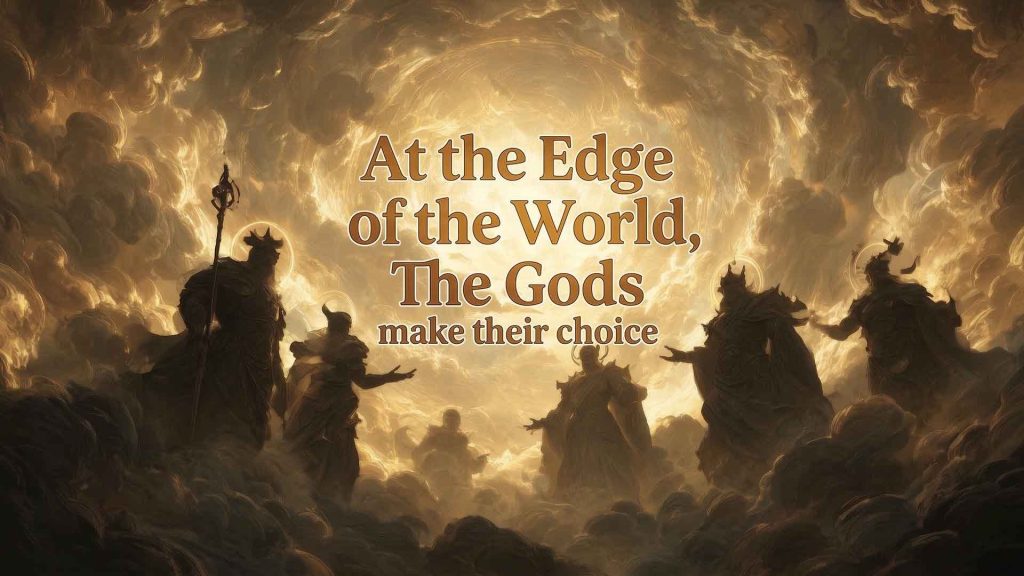
Nine hundred and ninety-nine years since the Fall of the Seleucarian Empire, in the month of Mayan, the God Scarlatti, Elder Lord of the Arts, and Great Bard dwelt alone upon the edge of the world. As Gods and mortals both awaited the turning of the thousandth year with a blend of cautious optimism and no small measure of unease, the Lord Bard, still freshly shorn of wing and bright eye following Love’s calamitous fracturing, brooded in silence. Long did that quietude persist, until the arrival of Haskor woke Scarlatti from His lonesome contemplations.
It seemed the Bard had come to this place to mourn the diminishing splendour of Creation. In place of hope and potential, the Taleweaver saw the spread of decline and depreciation, of the shrinking of Divine Realm, and the heartbeat of reality slowing. Addressing Him as “Skar”, the ancient name given to the Bard in the Heroes’ God’s own Saga and Myth, Haskor was not so easily swayed to despondent resignation. The New God urge His Elder Brother to effect change, reminding Him of past grief that He Himself had learned to accept. The past, so insisted the Hero, was not a place suited for shuttering away that which may cause pain.
“No.” The response came after long minutes of unvoiced tension in the air. “We have to make Our choice.” And without another word, Scarlatti, Skar, simply stepped over the edge of the cliff and disappeared.
Haskor followed in His chariot as Creation itself heaved under the authority of an Elder God, the resolve of Scarlatti extending His will across every inch of reality. The call to conclave, indelible and beyond gainsay of even the most reticent of His kin, was soon answered. Golden light and white flashes lit heaven and sky with the arrival of the Pantheon in its entirety, and, as the Great Bard put forth His proposal in the tongue of the Divine, clamour erupted in response between the Gods.
Their arguments went on for minutes that seemed like decades until the Smith, ever level-headed and thoughtful, was first to voice His agreement with Scarlatti’s plan. But only the first. Babel and Aegis, rarely in agreement, joined Pandora to voice Their staunch disapproval. Sartan and Vastar took the opposite position, suggesting that “it”, whatever “it” may be, was a crutch that should be abandoned. Twilight, doubtless mourning something in His web, chose to side with the Heir. The Sea, naturally, opposed the Sky, and the Bloodsworn united in agreement with the Bard, as did the Hero, the Earthmother as, in an ominous proclamation about Time and the Meld, did the Genesis. And as Prospero fought His dread at the prospect of losing something He deemed irreplaceable, the Moon spoke prophecies of regret.
Two Sisters remained. The first, the gentler, the last of the Great Sibyls, counselled Scarlatti to put aside His doubt and lent Her assent.
The second mocked Valnurana’s tender words and simply laughed. Lorielan offered a blistering reproach of the modern age’s obsession with the past and, though derisive and venomous in equal measure, finally agreed. Of regret and disappointment She spoke then, coldly reminding Scarlatti that He was no stranger to either. He would have to bear the weight of failure, should His choice prove a poor one.
But the Bard did not flinch. Instead He met the Eldest’s eyes with resolve to match Her own. Creation’s story must be freed from constraint, He insisted. And the last of the Gods began to relent.
“We are agreed.” The voice of Aegis, Elder God of War made the pronouncement, and the Merchant Lord Prospero came forward, preparing to retrieve the mysterious treasure that had called over a dozen Gods to convene.
~ ~ ~
Summary: Scarlatti and Haskor muse over the fate of Creation and the waning stewardship of the Gods over the world’s collective history. The Gods convene to discuss retrieval of a dangerous relic, and Prospero volunteers to collect it.
Patch notes, world events, and updates from Achaea - delivered to your inbox.
Name Please enter your name. Email Please enter a valid email address.Unsubscribe at any time via the link at the bottom of any email.