
Patch notes, world events, and updates from Achaea — delivered to your inbox.
Name Please enter your name. Email Please enter a valid email address.Unsubscribe at any time via the link at the bottom of any email.
The Apostates of Achaea

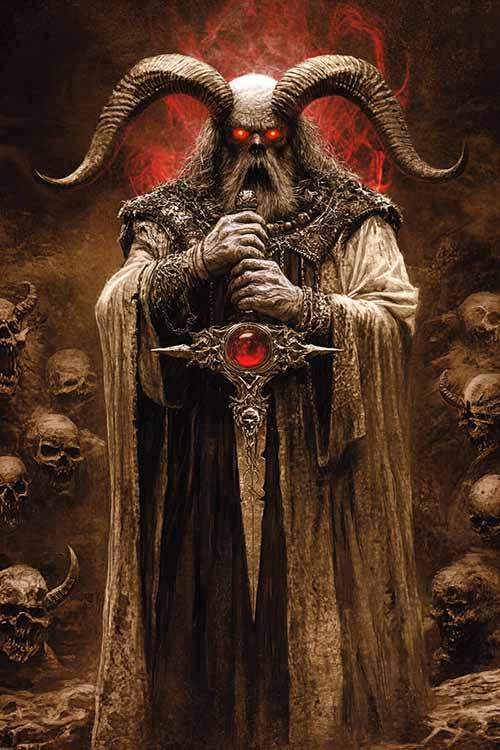
Apostates are Mhaldor’s black priests. Diabolical scholars and ritualists in service to Evil, they summon daemonic entities to do their bidding, drain life essence from mortals through Necromancy, and curse their enemies with the evil eye. Where the Infernal is Mhaldor’s iron arm, the Apostate is its dark soul.
Apostate lore and origin
The Apostate class was born from a failed Evil ritual. In days long past, the armies of Evil plotted to open a rift to the daemon planes through the torture and sacrifice of a holy guardian angel. The angel was resurrected and the rift closed, but not before a daemon general named Morimbuul came through. The summoner, a man named Xerimor, subdued the daemon and forced Morimbuul to instruct him in the daemonic arts. The class of Apostates was born from that subjugation.
Modern Apostates are diabolical scholars and ritualists in the service of Evil. The lore frames them as “black priests” who spread the teachings of the Gods of Evil throughout the realm. They act as the spiritual pulse of Mhaldor, the city of Evil. Because of their devotion, they are rarely welcome in other cities. The class is alignment-locked to Mhaldor in the same way the Paladin is locked to Targossas.
Through Apostasy, an Apostate summons and commands daemonic entities: sentient daeggers, bloodworms, nightmares, daemon fiends, and the powerful Baalzadeens. Through Necromancy, they drain life essence from the hearts of mortals and use it for higher spells, including, at the highest level, the ability to guard their own soul from death. Through Evileye, they impose afflictions on enemies through nothing more than eye contact and a whispered curse.
This is one of Achaea’s most thematically dense classes. The skill names alone: Apostasy, Necromancy, Evileye. They telegraph the identity. The gameplay matches.
Signature combat identity: the Baalzadeen, life essence, and the stare
The first is the Baalzadeen. Every Apostate has a personal Baalzadeen, a powerful daemon they have bound to their service. The Baalzadeen is not a pet or a temporary summon: it’s a permanent companion, called and dismissed at will. It can blast enemies, sear flesh, drain mana, trace movements, fortify the Apostate’s health, and tear the soul from an unwilling victim. The relationship is dark and intimate: the lore describes the Baalzadeen as “loving” and the Apostate as Tasting its flesh. Daeggers (living daemonic blades), daemonites, bloodworms, fiends, and nightmares fill out the broader summoning toolkit.
The second is life essence. Necromancy runs on life essence, and Apostates accrue it primarily through Cannibalism: ripping out and consuming the hearts of their victims. With sufficient essence, an Apostate can boost their mana (Sapience), boost their health (Vigour), assume the form of the deadly blackwind, exterminate plant life across a location, and ultimately cage their own soul through Soulcage, the highest expression of the art and a literal hedge against death.
The third is the evil eye. Evileye is afflictive combat through pure stare. With STARE , an Apostate can curse a victim with fear, blindness, paralysis, claustrophobia, asthma, vomiting, sleep, dementia, anorexia, plague: over thirty distinct afflictions, plus the high-end Deadeyes that inflicts multiple simultaneously. Truestare lets the Apostate punch through magical shields and curse targets that would otherwise be immune.
Combined, this is a class that fights at three layers: the daemonic summons applying pressure from outside, the necromantic essence powering high-end spells, and the evileye dropping afflictions on top. An experienced Apostate is one of the most layered combatants in Achaea.
The three skills of an Apostate
An Apostate commands three skill sets: Apostasy, Necromancy, and Evileye. A fledgling Apostate gains Evileye and Necromancy; Apostasy is granted upon embracing the class.
Signature abilities: Daegger, Hunt, Envenom
The hallmark skill of the Apostate. Apostasy is the art and science of summoning and dealing with the mighty Baalzadeens and lesser daemons. An Apostate learns to wield sentient daeggers, forms a relationship with their Baalzadeen, and summons a variety of lesser daemons into a pentagram drawn with blood.
The most feared ability of Apostasy is the one that lets the Baalzadeen tear the soul from an unwilling victim. The class is built around the bond with the demon.
Abilities (36)
| Ability | Description |
|---|---|
| Daegger | Call to your side a living, daemonic daegger to aid you. |
| Hunt | Command your daegger to hunt your enemy. |
| Envenom | Envenom your daegger to poison your victims. |
| Pentagrams | Sketch an infernal pentagram, in blood. |
| Baalzadeen | Summon your beloved Baalzadeen to do your bidding. |
| Taste | Taste the flesh of your Baalzadeen. |
| Rest | Order your Baalzadeen to rest. |
| Armour | Request that your Baalzadeen grant you protection. |
| Horror | Instill great fear into your victim with your demon’s aid. |
| Fiend | Summon a daemon fiend to attack an enemy. |
| Scorch | Order your Baalzadeen to melt icewalls. |
| Presences | Locate those in your local area with your Baalzadeen. |
| Mask | Summon dark powers to mask your demonic servitor. |
| Sap | Drain away the mana of a victim with your loving demon. |
| Trace | Command your Baalzadeen to trace the movements of someone. |
| Fortify | Fortify the health of your Baalzadeen with yours. |
| Apathy | Become numb to the crushing pain of existence. |
| Shadowstrike | Use your daegger to strike at the shadow of a victim. |
| Beckon | Your Baalzadeen is an attractive force indeed. |
| Daemonite | Summon forth a small daemonite to annoy your enemies. |
| Strip | Command your demon to strip the defences from someone. |
| Sear | Order your Baalzadeen to sear the flesh of an enemy. |
| Puncture | Pierce another’s flesh with your daegger. |
| Eliminate | Use your daegger to tear the beating heart from a victim. |
| Bloodworms | Summon forth a horde of these foul lesser daemons. |
| Blast | Order your Baalzadeen to blast your enemies from the room. |
| Mindread | Command your demon to listen to incoming tells. |
| Nightmare | A daemonite born of the rape of the Goddess of Dreams. |
| Fury | Cause those around you to go into an enhancing fury. |
| Stain | Stain the soul of someone with your Baalzadeen. |
| Bloodpact | An unholy pact with the Inferno. |
| Syphon | Order your Baalzadeen to draw afflictions away from you. |
| Contemplation | Perceive the state of another’s mental strength. |
| Refuge | Seek refuge in the Inferno. |
| Corrupt | Lay low the heretics with demonic corruption. |
| Catharsis | Perhaps their death is the greatest mercy there is. |
Signature abilities: Deathsight, Chill, Sense
Necromancy is the dark art of death magic. At the lower levels, there is an assortment of rather nefarious abilities. Soon though, the ability of Cannibalism is gained, a skill which has inspired wide-spread fear of those practicing Necromancy. Through Cannibalism, a Necromancer increases their life essence, which powers the higher abilities. At the very highest level, a Necromancer gains the power to protect their very soul from death.
Abilities (32)
| Ability | Description |
|---|---|
| Deathsight | Attune yourself to the Underworld. |
| Chill | Send the cold of the grave to plague an opponent. |
| Sense | Seek out the life force of another being. |
| Decay | Causing your opponent’s flesh to decay. |
| Night | Create darkness in the room. |
| Shroud | Perform many actions in secret. |
| Screech | The shriek of the banshee. |
| Taint | Attack those with pure souls. |
| Feed | Derive sustenance from another being. |
| Leech | Leech away the mental energy of your target. |
| Lifevision | Allows you to see many hidden beings. |
| Shrivel | Cause your opponent’s limbs to shrivel up. |
| Cannibalism | Rip out and consume the heart of your victims. |
| Essence | Sense about how much life essence you have. |
| Sapience | Draw upon your essence to increase your mana. |
| Vigour | Draw upon your essence to increase your health. |
| Putrefaction | Cause your flesh to decay and melt. |
| Drain | Drain your life essence into another Necromancer. |
| Belch | Spew forth a noxious gas. |
| Deathaura | Surround yourself in a miasma of evil. |
| Disfigure | Curse someone with the visage of a rotting corpse. |
| Soulstorm | Mark their souls with profane essence. |
| Gravehands | Summon the hands of the grave to hinder your opponents. |
| Leprosy | Spread disease to all around you. |
| Exterminate | Destroy all plant life in a location. |
| Vengeance | Revenge with your dying breath. |
| Soulspear | Meld soul-matter from the dead into a physical weapon. |
| Transverse | Cross vast distances in a single step. |
| Blackwind | Assume the form of the deadly blackwind. |
| Desecration | Banish the holy rites of the Bloodsworn Gods. |
| Vivisect | Rip your victim’s chest open and torture him to death. |
| Soulcage | Harness your life essence to escape death itself. |
Signature abilities: Fear, Deaf, Impatience
Evileye is afflictive combat through eye contact. Related in flavour to the Shaman’s Curses skill but operates through a different mechanic: STARE . The Apostate makes eye contact and imposes the curse.
At low levels: single afflictions (fear, blindness, paralysis). At high levels: Deadeyes (multiple afflictions simultaneously) and Truestare (cast through magical shields).
Abilities (35)
| Ability | Description |
|---|---|
| Fear | Instill great fear in your target. |
| Deaf | Dampen an opponent’s hearing. |
| Impatience | Inability to concentrate on focused tasks. |
| Clumsy | Your victim will fumble about. |
| Vertigo | A devastating fear of heights. |
| Bleed | Curse your opponent with uncontrollable bleeding. |
| Amnesia | Make your victim forget what he meant to do. |
| Agoraphobia | Fear of open spaces. |
| Deadeyes | Inflict multiple ailments simultaneously. |
| Breach | Cut through an opponent’s curseward. |
| Dizzy | Causes problems when trying to move. |
| Paralysis | Your victim’s body shall betray them. |
| Claustrophobia | Fear of being under cover. |
| Paranoia | They are out to get you, believe me. |
| Blind | Curse an opponent with blindness. |
| Masochism | The love of your own pain. |
| Asthma | Creates difficulty when breathing. |
| Reckless | A dangerous disregard for personal well-being. |
| Epilepsy | Disrupt the nervous system of your victim. |
| Confusion | Befuddle the minds of your enemies. |
| Peace | Fill your enemy’s mind with thoughts of peace. |
| Dementia | Distorts the victim’s perceptions of the world. |
| Sight | Restoring your sight. |
| Sicken | Bring down disease upon them. |
| Plague | Curse someone with the voyria affliction. |
| Addiction | Creates a terrible addiction. |
| Cowardice | Rob the courage from a victim. |
| Stupid | Make a victim dumb as a rock. |
| Manaleech | A terrible curse of the mind. |
| Sensitivity | Cause your victim to become extremely sensitive to pain. |
| Vomiting | Upset the stomach of your enemy. |
| Sleep | Put an enemy to sleep, or remove his sleep defences. |
| Anorexia | A terrible condition, preventing one from eating. |
| Weariness | Weaken the body of your opponent. |
| Truestare | Cast the evileye through magical shields. |
Apostate Houses and cities
See Achaea’s city-states for the cities where these Houses recruit.
Apostate is alignment-locked to Mhaldor (Evil). Identical House list to Infernal: 4 Houses total.
| House | City | Notes |
|---|---|---|
| The Insidium | Mhaldor | Mhaldor’s House of rites and traditions. The natural Apostate home. |
| The Dread Legates | Mhaldor | Mhaldor’s military House. Some Apostates lean martial enough to fit here. |
| The Grand Merchant Collective | (cityless) | The cityless trader House. Rare Apostate choice. |
| The Carnivalis Institute of Jestering | (cityless) | The Jester-founded cityless House. Rare Apostate choice. |
To check current House availability in-game: HOUSE LIST APOSTATE.
A note on the alignment lock: an Apostate’s skills are fuelled by daemonic and evil forces. Act against those forces and your ability to use the skills can be revoked. The class requires roleplaying, and the philosophical commitment is real.
What an Achaea Apostate might look like
Class shapes silhouette; race shapes everything else about a character’s appearance. The art below shows what an Apostate can look like across a few of Achaea’s 14 playable races. These are illustrative examples. Any race can play an Apostate.


How to roleplay an Apostate in Achaea
The Apostate is Mhaldor’s spiritual pulse. Where the Infernal serves Evil as a warrior, the Apostate serves Evil as a scholar, priest, and ritualist. The structural mirror is the Priest class in Targossas: the same role, the opposite alignment. The roleplay distinction matters: Infernals are the iron arm; Apostates are the dark mind.
Apostate roleplay breaks into three distinct angles:
You are a black priest, not a warrior. Apostates spread the teachings of the Gods of Evil. They officiate rites, study daemonic lore, and act as Mhaldor’s theological backbone. If you want to play a religious character on the dark side of the Good-Evil axis, this is the class. The Insidium is the natural home for this style of Apostate.
Your Baalzadeen is named and feared. Like the Paladin’s eagle or the Infernal’s hyena, the Baalzadeen is a permanent companion. But unlike those, your Baalzadeen is openly demonic. Other players name their Baalzadeens. The relationship is part of your roleplay surface. A well-played Apostate refers to the Baalzadeen by name, treats the bond with the seriousness the lore demands, and uses the demon as both servitor and character.
Necromancy carries real weight. Cannibalism, ripping out and consuming hearts, is not a flavour ability. It’s mechanically how your character accrues life essence to fuel higher spells. Players who lean into this aspect, treating the consumption as ritual rather than convenience, get rich roleplay material out of it.
A few practical notes:
Apostates and Infernals work together. The two classes are Mhaldor’s primary fighting force: Apostates handle ritual, lore, and afflictive combat; Infernals handle physical confrontation. Allied gameplay is core to the experience.
You will be hated outside Mhaldor. Targossas, Eleusis, and Cyrene have reasons to distrust Apostates. Hashan and Ashtan are warmer but never welcoming. The class is meant to be feared.
The combat is mechanically demanding. Managing the Baalzadeen, accruing essence through Cannibalism, layering Evileye afflictions, and timing Apostasy abilities is a lot to coordinate. This isn’t a class for someone who wants simple combat.
If you want a class with deep theological roleplay, layered afflictive combat, and a binding to one of Achaea’s most distinctive cities, Apostate delivers.
Other classes to consider
Three classes worth a look if Apostate is on your shortlist (or browse all 21 Achaea classes for the full comparison):
Infernal: Mhaldor’s Iron Arm of Evil
Mhaldor’s other class. Shares alignment, House list, and factional pressure. The difference is martial vs. theological. Choose Infernal if you want to be Mhaldor’s warrior; choose Apostate if you want to be its priest.
Pariah: The Accursed Sorcerer
The other dark priest class, but not Mhaldor-locked. Pariahs are outcasts who cheat death and spread plague through Charnel, Pestilence, and Memorium. Same dark-scholar aesthetic, but the alignment is loose and the class is younger. Choose Pariah if you want the death-magic identity without Mhaldor’s specific theological framework.
Occultist: Ashtan’s Chaos Scholar
Ashtan’s dark scholar counterpart. Where the Apostate serves Evil and Mhaldor, the Occultist serves Chaos and Ashtan. Different ethos, similar role: ritualist, summoner, scholar of forbidden arts. Choose Occultist if Ashtan’s relationship with Chaos appeals more than Mhaldor’s commitment to Evil.