
Patch notes, world events, and updates from Achaea — delivered to your inbox.
Name Please enter your name. Email Please enter a valid email address.Unsubscribe at any time via the link at the bottom of any email.
The Runewardens of Achaea
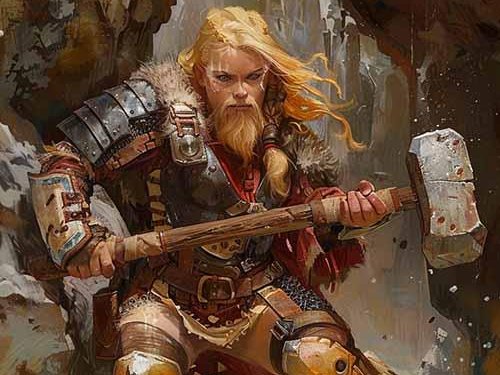
Runewardens are Achaea’s most welcomed knight class. They originated in the snow-clad mountains of the Southern Vashnars, in the city of Cyrene, and their skills aren’t bound to any single ethos. A Runewarden is welcome in any city willing to abide by their discipline and honour. They fight with rune-inscribed blades, a bonded falcon, and the lethal craft of Totems.
Runewarden lore and origin
The Runewardens first formed deep within the Heart of the Vashnars, now known as the Gate of Oceanus, in the mountain city of Cyrene. Though the founding location matters historically, the class’s defining feature is that it doesn’t carry the alignment baggage of its peers. A Runewarden isn’t a Paladin sworn to Targossas, isn’t an Infernal in service to Evil, isn’t an Unnamable bound to Chaos. The Runewarden is, first and last, a knight.
Armed in shimmering armour and wielding blades inscribed with arcane runes, Runewardens are the epitome of discipline and honour in combat. Protection and preservation is their motto. They are selfless in whatever cause they represent. Their study of representational magic gives them the knowledge to craft totems and sketch runes upon them, and these totems often stand as protective installations: implanted in cities, mansions, and other player-controlled properties, attacking enemies on sight.
What a Runewarden actually looks like in combat: a heavily-armoured warrior with two flashing dual blades, often coated in venoms, dripping with runes that channel earth and storm. Their formations on the battlefield are described in the lore as “a dazzling sight.” Outside of combat, they craft totems for their House and city, etch runes for allies, and act as the most reliable martial class in Sapience because they can serve any banner.
This is also one of the kinder learning curves among Achaea’s warrior classes. The class has been around long enough to accumulate extensive player-written guides. The combat is direct rather than abstract. New players who want a martial class without factional pressure tend to land here first.
Signature combat identity: runes, totems, and the falcon
Two systems make a Runewarden a Runewarden: Runelore and Discipline.
Runelore is the rune system. A Runewarden sketches runes on themselves, their allies, their weapons, their armour, and the ground. Runes on people and gear work automatically. Runes on the ground work continuously, once, or only when an enemy enters the room. Each rune has a discrete effect: paralysis, bleeding, fear, sleep, damage, defence, healing. The mastery of the skill isn’t memorising one rune; it’s stacking and configuring runes for a specific situation.
The Totem is where Runelore’s power escalates. By sketching up to six runes onto a Totem and then Implanting or Standing it, a Runewarden creates a weapon of layered effect. Totems guard cities, mansions, and strongholds. Anyone the Totem is tuned to affect who enters the room can be hit by every rune at once. It’s the closest thing Achaea has to a programmable trap.
Discipline is the other half: a bonded falcon (FALCON REQUEST at any hatchery), archery with longbows, crossbows, and the fabled darkbows of Hashan, and a set of aggressive combat abilities like Battlecry, Engage, and Fury. The falcon scouts rooms, tracks fleeing targets, and strikes with talons on command. The warhawk upgrade equips it with talons of steel for serious combat work.
Add Weaponmastery, the shared knight skill that lets a Runewarden specialise in two-handed, sword and shield, dual cutting, or dual blunt, and you get a class that fights at three layers: prepared room control through runes, mid-range presence through the falcon and bow, and direct melee through the chosen weapon school.
The three skills of a Runewarden
A Runewarden commands three skill sets: Runelore, Discipline, and Weaponmastery. A fledgling Runewarden gains Runelore and Weaponmastery; Discipline is granted upon embracing the class.
Signature abilities: Smudge, Sketch, Kena
Runelore revolves around two aspects: Runes and Totems. By sketching runes on the ground, on yourself, on others, or on weapons and armour, a Runewarden achieves a wide range of effects. Runes on people or gear work automatically; runes on the ground work continuously, once, or when an enemy enters the room. The help scroll for each rune specifies the trigger.
The true power of Runelore lies in the Totem. By sketching up to six runes onto a Totem and either Implanting or Standing it, a Runewarden creates a layered weapon that can wreak havoc on anyone the Totem is tuned to affect.
Abilities (41)
| Ability | Description |
|---|---|
| Smudge | Ability to destroy runes. |
| Sketch | Sketch runes with expert precision. |
| Kena | A rune to inspire fear. |
| Uruz | Heal your allies with earth magic. |
| Fehu | Causes sleeping urges. |
| Pithakhan | Attack the mental reserves of your enemies. |
| Jera | A rune to increase the vitality of the bearer. |
| Inguz | A rune with the ability to paralyse. |
| Wunjo | Upon encountering this, an enemy’s sight will be returned. |
| Lagul | Add an element of bleeding to your strategem. |
| Sowulu | Damages the health of enemies. |
| Algiz | A rune of protection from damage. |
| Isaz | A rune to call shockwaves to take your enemies off balance. |
| Totems | The symbol of the master of Runelore. |
| Dagaz | This rune will heal afflictions from you at random. |
| Gebu | This rune will increase the blunt protection of armour. |
| Gebo | A rune to increase the cutting protection of armour. |
| Gular | Drawing on the power of the earth, raise a stone wall. |
| Raido | Summon a spiritual steed to bear you home. |
| Thurisaz | Call forth a spout of molten lava from the earth. |
| Lagua | Further punish your foe. |
| Hugalaz | Call down a hailstorm around you. |
| Truesketch | Sketch more than one rune on the ground. |
| Nauthiz | Suck the nourishment from your foes. |
| Mannaz | Return hearing to a victim. |
| Othala | Besiege your enemies with multiple spouts of molten lava. |
| Sleizak | Afflict a foe with the horrible voyria poison. |
| Tiwaz | This rune will remove the defenses of your enemies. |
| Berkana | Provides health regeneration to the bearer. |
| Nairat | A rune to entangle. |
| Eihwaz | A powerful vibration-dampening rune. |
| Runebinding | Bind your runes to your body. |
| Laguz | Increased damage to the limbs of your foe. |
| Runicarmour | Empower armour with the strength of the earth. |
| Runeblades | Runewardens may empower a weapon as a legendary runeblade. |
| Loshre | Cause an opponent to become afflicted with anorexia. |
| Configuration | Combining runes about a central point. |
| Implant | Create a bond between your totem and the earth. |
| Empower | Enable smudge reporting. |
| Designate | Arrange clear title and ownership. |
| Bisect | As relentless as the storm. |
| Adapt | Battle waits for no one. |
Signature abilities: Falcon, Weathering, Seek
Discipline has three distinct parts: Falconry, archery, and aggressive set-pieces.
Falconry is the heart. Every Runewarden bonds a falcon at a hatchery (FALCON REQUEST). The falcon scouts rooms, tracks fleeing enemies, strikes on command, delivers items, and reports the state of opponents. Warhawk upgrades it with steel talons for serious combat. Archery covers longbows, crossbows, and darkbows, with Wind compensation for accuracy. The aggressive abilities — Battlecry, Engage, Fury — give the Runewarden the same set-piece toolkit shared by Paladins and Infernals, but tuned to the Runewarden’s unrestricted role.
You can also use FALCON SANCTUARY to send another knight’s falcon to safety, with the standard conditions (owner offline, same House/city, higher rank).
Abilities (31)
| Ability | Description |
|---|---|
| Falcon | Use the basic skills to interact with your falcon. |
| Weathering | Increase your ability to weather damage. |
| Seek | Order your bird to seek out an adventurer. |
| Glance | Look through the eyes of your bird. |
| Block | Obstructing departure with your body. |
| Fitness | Controlling your breathing. |
| Follow | Order your falcon to aerially follow someone. |
| Gripping | Grip your wielded items in a deathlock. |
| Barge | Barging your opponents. |
| Battlecry | Stun a target with the power of your voice. |
| Bowmanship | Use of the valued projectile weapon. |
| Quivers | Take full advantage of your quiver. |
| Wind | Further increase your accuracy through wind compensation. |
| Aiming | Increase your accuracy in shooting. |
| Sturdiness | Standing firm against attempts to move you. |
| Deliver | Order your falcon to deliver an object to someone. |
| Resistance | Reduce the damage taken from magical attacks. |
| Crossbows | A powerful projectile weapon. |
| Clotting | Reduce the level of your bleeding. |
| Rage | Throw off pacifying afflictions. |
| Rake | Command your falcon to strike with its talons. |
| Retrieve | Command your falcon to fetch an object for you. |
| Startle | Order your bird to harass an opponent’s steed. |
| Track | Order your falcon to follow and track someone. |
| Defend | Attempt to protect someone else with swordwork. |
| Observe | Your falcon can now report on the state of individuals. |
| Darkbows | Using the infamous darkbows of Hashan. |
| Warhawk | Equip your falcon with talons of steel. |
| Engage | Damage a cowardly opponent. |
| Swiftmount | Mount or vault your steeds at increased speed. |
| Fury | Temporarily raise your strength. |
Signature abilities: Swordplay, Specialise, Envenom
Weaponmastery is the shared knight skill that lets a Runewarden choose a fighting style: two-handed, sword and shield, dual cutting, or dual blunt. To pick or change a specialisation in-game: SPECIALISE IN . Changing later costs 100 lessons.
For the full ability roster across all four specialisations, see the Paladin spoke’s Weaponmastery section — the skill is identical across all knight classes that use it. Runewardens typically lean toward sword and shield or dual cutting, but no spec is mechanically wrong for the class.
General abilities (all specialisations)
| Ability | Description |
|---|---|
| Swordplay | Increased mastery of the shortsword. |
| Specialise | Gain proficiency in one of the schools of weaponry. |
| Envenom | Coat a weapon in venoms. |
| Arc | Swing your blade in a controlled arc. |
Runewarden Houses and cities
See Achaea’s city-states for the cities where these Houses recruit.
Runewarden has the widest House acceptance in Achaea: 16 Houses across every city plus two cityless options. The class is welcome anywhere willing to abide by its discipline and honour.
| House | City | Notes |
|---|---|---|
| The Dawnblade | Targossas | Targossan martial House |
| The Harbingers of Redemption | Targossas | Targossan succour/healing House |
| The Dread Legates | Mhaldor | Mhaldorian military House |
| The Insidium | Mhaldor | Mhaldorian rites and traditions House |
| The Esoteric Consortium | Ashtan | Ashtan martial House |
| The Savants of the Wheel | Ashtan | Ashtan academic House |
| The Nemesian Vanguard | Ashtan | Ashtan front-line House |
| The Vashnarian Shield | Cyrene | Cyrene guardian House |
| The Virtuosi | Cyrene | Cyrene artistic House |
| The Discurean Outriders | Cyrene | Cyrene explorer/academic House |
| The Krymenian Academy | Hashan | Hashan academic House |
| The Somatikos | Hashan | Hashan body-discipline House |
| The Scions of the Ithmia | Eleusis | Eleusis forestal House |
| The Heartwood Kin | Eleusis | Eleusis nature House |
| The Grand Merchant Collective | (cityless) | The trader House |
| The Carnivalis Institute of Jestering | (cityless) | The Jester-founded House |
To check current House availability in-game: HOUSE LIST RUNEWARDEN. To read about any House: HELP HOUSE .
A note on alignment: Runewarden has no factional lock. There is no in-game punishment for changing cities, switching Houses, or playing the class without an ethos commitment. This is the warrior class for players who want flexibility.
What an Achaea Runewarden might look like
Class shapes silhouette; race shapes everything else about a character’s appearance. The art below shows what a Runewarden can look like across a few of Achaea’s 14 playable races. These are illustrative examples. Any race can play a Runewarden.


How to roleplay a Runewarden in Achaea
The cleanest way to think about Runewarden roleplay is this: discipline and honour, applied to whatever your character has decided to serve.
Where a Paladin’s identity is locked to Targossas and a Priest’s is locked to Aurora, the Runewarden’s identity is locked to a personal code. The class’s lore explicitly says Runewardens “are selfless in whatever cause they represent.” That’s the hook. Your character picks the cause — a city, a House, a guildmaster, a memory — and the discipline follows from there.
A few things worth knowing if you choose Runewarden:
Your city choice matters more than usual. Because the class isn’t locked, the city you join becomes the lens through which your Runewarden’s discipline is read. A Targossan Runewarden reads almost like a Paladin without the divine bond. A Mhaldorian Runewarden reads almost like an Infernal without the hellforge. An Ashtani Runewarden reads as a Chaos servant who finds order through their own personal code. The flavour shifts dramatically.
Your falcon and your runes are your personal touches. Both are named. Both stay with you. Players who roleplay these well — naming the falcon, decorating their totems with specific runes that say something about their character, leaving runebound trinkets for friends — get a lot of mileage out of small recurring details.
You will be respected and seen as steady. The lore frames Runewardens as the reliable ones. In serious House and city work — defending walls, etching protective runes on shared property, training newer fighters — Runewardens are the dependable backbone. If you want to play a character whose word is trusted, this is the class.
If you want a class with strong martial identity, real player-to-player utility through runes and totems, and no factional pressure to walk a specific philosophical line, Runewarden delivers.
Other classes to consider
Three classes worth a look if Runewarden is on your shortlist (or browse all 21 Achaea classes for the full comparison):
Paladin: Targossas’ Holy Knight
The factional knight. Shares Weaponmastery, but trades the falcon for a golden eagle and trades runes for the divine art of Excision. Bound to Targossas and the Bloodsworn Divine. Choose Paladin if you want clearer moral framing and a class identity that comes pre-loaded with active divine relationships.
Infernal: Mhaldor’s Iron Arm of Evil
The dark mirror of Paladin. Shares Weaponmastery, but trades the falcon for a hyena and trades runes for the Oppression art rooted in the Seven Truths of Evil. Bound to Mhaldor. Choose Infernal if you want the Runewarden’s heavily-armoured combat style but with a hard alignment and the philosophical weight of Mhaldor.
Blademaster: The Named-Blade Tradition
Also unrestricted by alignment, but a completely different sword tradition. Where the Runewarden is a heavily-armoured rune-knight with a bow, a falcon, and a flail, the Blademaster is a lightly-armoured swordsman with a single named blade and the Shin trance. Same flexibility, very different combat identity.