
Patch notes, world events, and updates from Achaea — delivered to your inbox.
Name Please enter your name. Email Please enter a valid email address.Unsubscribe at any time via the link at the bottom of any email.
The Infernals of Achaea
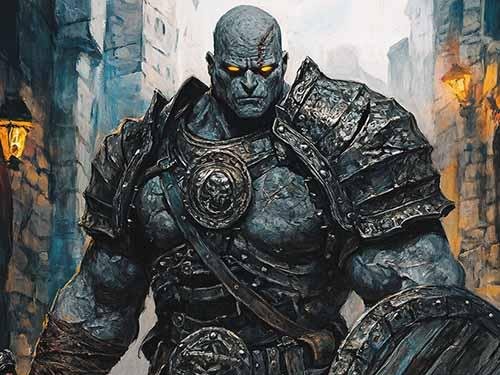
Infernals are the iron arm of Mhaldor. Clad in hell-forged steel, accompanied by a hyena of the Inferno, sworn to Evil and the Seven Truths, they are Mhaldor’s vanguard against everything Targossas, Cyrene, and the rest of Sapience stands for. The class is the dark mirror of the Paladin, and the lore is uncompromising: there is no neutral Infernal.
Infernal lore and origin
The Infernal class was founded in Ashtan by Ekary Lucoster, known as the Sinistar. The original Guild was destroyed in a war between the Infernals themselves and the city of Ashtan that hosted them. When Mhaldor was founded as the city of Evil to the west, the surviving Infernals refounded their Guild there, and Mhaldor has been their home ever since.
With the Maaldathi House since fallen, the Infernals now live in service to Evil before all else. They are the iron arm of Mhaldor, clad in hell-forged steel, fighting with weapons forged in the lower realms. The lore describes them as “a vision of the hellish lower realms as they bestride the battlefield with their daemonic companions at their side.” They are sworn to the Seven Truths of Evil, the philosophical framework of Mhaldor, and every aspect of the class is shaped by that oath.
In the year 837 AF, by the will of the Malevolent One, the Infernal Knights cast aside the practice of Necromancy in favour of the arts of Oppression. The class as it exists today reflects that rework. Modern Infernals don’t drain life essence from corpses; they crush the weak through devastating force, the philosophical heart of Mhaldor’s belief that strength is forged through combat and pain.
What an Infernal is, in plain terms: a heavily-armoured warrior with a bound hyena, hell-forged weapons, the ability to summon vile maggots and surround themselves with a death-aura, and the legal right within Mhaldor to enforce the city’s brutal philosophy on lesser souls. The class is feared, and it’s meant to be feared.
Signature combat identity: the hyena, the hellforge, and the Seven Truths
Three things make an Infernal an Infernal.
The first is the hyena. Every Infernal summons a Hyena of the Lord at the summoning chamber in the Mhaldor cathedral (HYENA REQUEST). The hyena is the Infernal’s counterpart to the Paladin’s eagle and the Runewarden’s falcon: scouts rooms, tracks fleeing enemies, mauls on command, scents heretics, feeds on the fallen (“Take of the Lord into your beast”). The lore frames the hyena as “a vicious agent of the Inferno,” and the lexical register is intentional. Every Infernal mechanic carries Mhaldor’s philosophical weight.
The second is the hellforged steel. The skill name itself, Hellforge, is the foundational ability of Oppression. An Infernal who acts against Evil or Mhaldor loses their ability to use hellforged weapons and armour. The mechanic is built into the class. You don’t accidentally play an Infernal without serving the Lord; the class itself enforces the alignment.
The third is the structural philosophy. Oppression is organised by the Seven Truths of Evil. Each cluster of abilities is introduced by a quoted Truth: “What is called evil is simply the drive for advancement, for greatness.” “Cruelty is the method by which one weeds out the weak.” “The body may be made stronger through combat.” The abilities aren’t just abilities. They’re enactments of the Truths. This is the most philosophically loaded class in Achaea, and the mechanics never let you forget it.
Add Malignity (the shared-pattern knight skill with archery, aggressive set-pieces, and the bonded hyena) and Weaponmastery (the shared knight specialisation skill), and you get a class that fights like a warrior and reads like scripture.
The three skills of an Infernal
An Infernal commands three skill sets: Malignity, Weaponmastery, and Oppression. A fledgling Infernal gains Oppression and Weaponmastery; Malignity is granted upon embracing the class.
Signature abilities: Hyena, Weathering, Seek
Malignity has three parts: the bonded hyena, archery, and aggressive combat abilities.
The hyena is the heart. Every Infernal summons a Hyena of the Lord at the summoning chamber in the Mhaldor cathedral (HYENA REQUEST). The hyena scouts rooms, mauls on command, tracks fleeing enemies, and serves as the visible mark of the Infernal’s bond to the Inferno. Archery covers longbows, crossbows, and the darkbows of Hashan. The aggressive set, Battlecry, Engage, and Fury, gives the Infernal the same baseline knight toolkit shared by Paladins and Runewardens.
You may also use HYENA SANCTUARY to send another Infernal’s hyena to safety, with the standard conditions (master offline, same House/city, higher rank).
Abilities (31)
| Ability | Description |
|---|---|
| Hyena | A vicious agent of the Inferno. |
| Weathering | Increase your ability to weather damage. |
| Seek | Order your hyena to seek its prey. |
| Glance | See as the beast sees. |
| Block | Obstructing departure with your body. |
| Fitness | Controlling your breathing. |
| Follow | To find the prey. |
| Gripping | Grip your wielded items in a deathlock. |
| Barge | Barging your opponents. |
| Battlecry | Stun a target with the power of your voice. |
| Bowmanship | Use of the valued projectile weapon. |
| Quivers | Take full advantage of your quiver. |
| Wind | Further increase your accuracy through wind compensation. |
| Aiming | Increase your accuracy in shooting. |
| Sturdiness | Standing firm against attempts to move you. |
| Resistance | Reduce the damage taken from magical attacks. |
| Crossbows | A powerful projectile weapon. |
| Clotting | Reduce the level of your bleeding. |
| Rage | Throw off pacifying afflictions. |
| Retrieve | Take it for the Lord. |
| Startle | The beasts of burden need a brutal hand. |
| Maul | Savage them without mercy. |
| Track | Evil gives no quarter. |
| Defend | Attempt to protect someone else with swordwork. |
| Scent | Sniff out the heathens. |
| Darkbows | Using the infamous darkbows of Hashan. |
| Feast | Take of the Lord into your beast. |
| Engage | Damage a cowardly opponent. |
| Deliver | An exercise in logistics. |
| Swiftmount | Mount or vault your steeds at increased speed. |
| Fury | Temporarily raise your strength. |
Signature abilities: Swordplay, Specialise, Envenom
Weaponmastery is the shared knight skill that lets an Infernal choose a fighting style: two-handed, sword and shield, dual cutting, or dual blunt. To pick or change a specialisation in-game: SPECIALISE IN . Changing later costs 100 lessons.
For the full ability roster across all four specialisations, see the Paladin spoke’s Weaponmastery section. The skill is identical across all knight classes that use it. Infernals typically favour two-handed (raw destructive force) or dual blunt (limb destruction matches Mhaldor’s philosophy of breaking the weak).
General abilities (all specialisations)
| Ability | Description |
|---|---|
| Swordplay | Increased mastery of the shortsword. |
| Specialise | Gain proficiency in one of the schools of weaponry. |
| Envenom | Coat a weapon in venoms. |
| Arc | Swing your blade in a controlled arc. |
Signature abilities: Relentless, Exterminate, Infestation
Oppression is the dark replacement for the Necromancy that Infernals practiced before 837 AF. Where Necromancy drained life essence from the dead, Oppression channels devastating, overwhelming force through the living. The skill is organised by the Seven Truths of Evil, Mhaldor’s philosophical framework, and the abilities are grouped under each Truth.
The foundational ability is Hellforge: the right to wield Mhaldor’s hellforged weapons and armour. Lose Mhaldor’s favour, lose Hellforge. The mechanic is the alignment lock made literal.
Hellforge: Rise in His service.
What is called evil is simply the drive for advancement, for greatness:
| Ability | Description |
|---|---|
| Relentless | His legion will not falter. |
| Exterminate | The Lord’s dominion shall expand. |
| Infestation | Summon vile maggots from the depths. |
Cruelty is the method by which one weeds out the weak:
| Ability | Description |
|---|---|
| Implacable | Then serve in death. |
| Ravage | Mercy is a disease. |
| Torture | Let the heathens suffer for their blasphemy. |
| Deathaura | Surround yourself in a miasma of evil. |
Weakness must be eliminated in all its forms:
| Ability | Description |
|---|---|
| Punishment | Their weakness shall not go unanswered. |
| Tyranny | They shall bend the knee. |
| Conqueror | Go forth in His name. |
The enemies of strength are those who trumpet craven values:
| Ability | Description |
|---|---|
| Predator | To hide is futile. |
| Exploit | The flaws of the heathens are known to you. |
| Desecration | Banish the holy rites of the Bloodsworn Gods. |
The body may be made stronger through combat:
| Ability | Description |
|---|---|
| Rampage | Crush their hope. |
| Bloodlust | Until the last breath. |
| Apotheosis | There can be but one. |
The mind may be made stronger through the elimination of conscience:
| Ability | Description |
|---|---|
| Torment | In body and mind. |
| Quash | Put them back in their place. |
| Agony | They shall bleed for the Lord. |
| Vivisect | They shall serve as example. |
The spirit may be made stronger by enduring hardships:
| Ability | Description |
|---|---|
| Pitiless | Death is no barrier to His triumph. |
| Unswayed | You will overcome. |
| Anguish | Pain is nothing before your will. |
| Cripple | Break the body, forge the spirit. |
Infernal Houses and cities
See Achaea’s city-states for the cities where these Houses recruit.
Infernal is alignment-locked to Mhaldor and the service of Evil. Only 4 Houses accept the class: two in Mhaldor and two cityless.
| House | City | Notes |
|---|---|---|
| The Dread Legates | Mhaldor | Mhaldor’s military House. The traditional Infernal home. |
| The Insidium | Mhaldor | Mhaldor’s House of rites and traditions. The spiritual/philosophical Infernal home. |
| The Grand Merchant Collective | (cityless) | The cityless trader House. Open to most classes, including Infernals whose path is commerce-led. |
| The Carnivalis Institute of Jestering | (cityless) | The Jester-founded cityless House. Rare Infernal pick. |
To check current House availability in-game: HOUSE LIST INFERNAL. To read about any House: HELP HOUSE .
A note on the alignment lock: an Infernal who acts against Evil or Mhaldor may have their access to hellforged weapons and armour revoked. The class explicitly requires roleplaying, not optional, not light-touch. Mhaldor will hold you accountable.
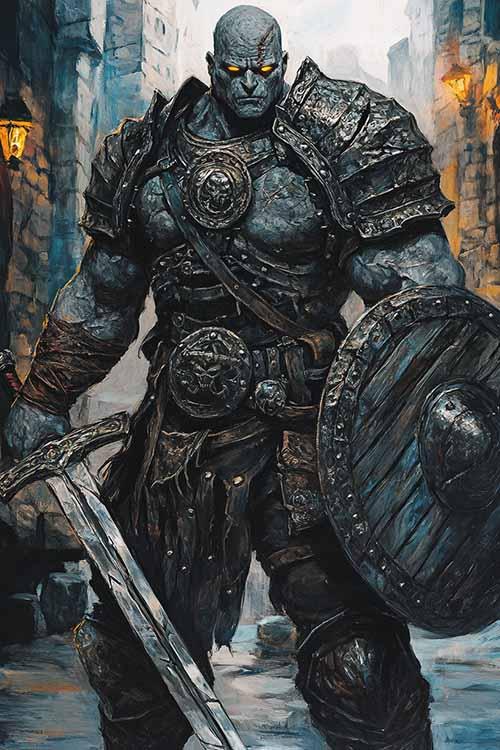
What an Achaea Infernal might look like
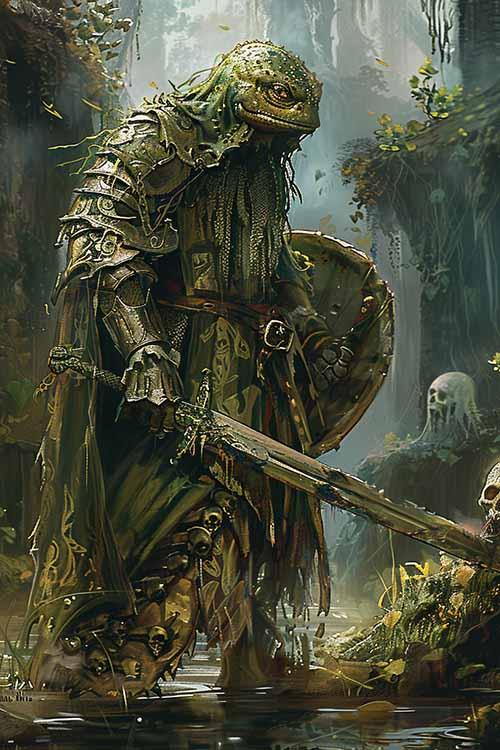
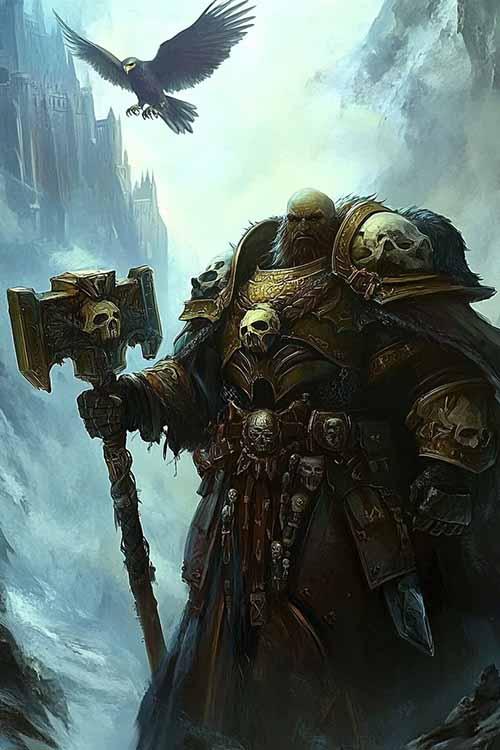
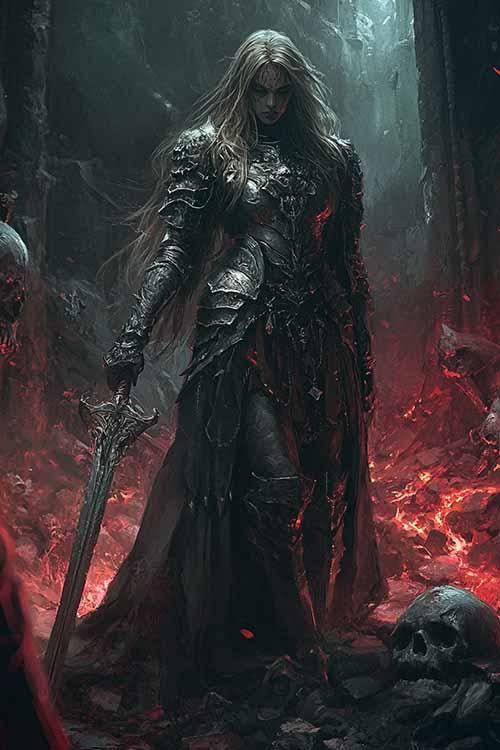
Class shapes silhouette; race shapes everything else about a character’s appearance. The art below shows what an Infernal can look like across a few of Achaea’s 14 playable races. These are illustrative examples. Any race can play an Infernal.
How to roleplay an Infernal in Achaea
There is no neutral Infernal. The class commits you to Mhaldor, to the Lord, to the Seven Truths of Evil. Your character’s life is structured around that commitment, and other players will read your character through that lens.
Infernal is, in practice, a roleplay class. The philosophical framework is built into the skill structure (see Oppression’s Seven Truths above). The class lore is uncompromising. The mechanical consequences for breaking the oath are real (lose Hellforge, lose the class’s signature gear). If you want to play a character with strong moral framing and a community of like-minded players who will hold you to that framing, Infernal delivers in a way that few other classes do.
A few things worth knowing if you choose Infernal:
You will be in conflict with Targossas. Mhaldor and Targossas are the central Good-Evil axis of Achaea. Paladins, Priests, Aurora’s worshippers, Deucalion’s faithful: these are your sworn enemies. Expect raids on Mhaldor and expect to raid Targossas. Expect long-running PvP grudges with named players. This is the longest-running rivalry in the game and your character lives inside it.
The Seven Truths are real philosophy. Mhaldor’s framework, strength forged through combat, cruelty as a tool for weeding out weakness, conscience as a hindrance, is fully developed in the game’s lore. Other Mhaldorian players take it seriously and your character will be expected to engage with it. If you want to play a casual villain who dabbles in evil, this isn’t the class. Infernals operate within a coherent philosophical system.
Your hyena reads differently from the Paladin’s eagle. Where the Paladin’s eagle is celebrated by allies and dreaded by enemies as a herald of righteousness, the hyena is a feral predator that scents heretics and feasts on the dead. The flavour text earns its keep. Players who lean into the hyena’s character, naming it, treating it as a vassal of the Inferno rather than a pet, get much more from the class.
The Dread Legates and the Insidium play differently. The Dread Legates lean military: front-line warfare, raids on Targossas, defence of Mhaldor’s territory. The Insidium leans ritual and philosophical: maintenance of Mhaldor’s rites, theological depth, the spiritual machinery of Evil. Pick the one that matches the Infernal you want to be.
Infernal is the most lore-committed class in Achaea. The philosophical framework is real, the enemy is named, and the faction will hold you to it.
Other classes to consider
Three classes worth a look if Infernal is on your shortlist (or browse all 21 Achaea classes for the full comparison):
Paladin: Targossas’ Holy Knight
The holy mirror. Where the Infernal serves Evil and Mhaldor, the Paladin serves Good and Targossas. Shares Weaponmastery, but uses Excision and Valour where the Infernal uses Oppression and Malignity. The two classes are designed to oppose each other. Choose Paladin if you want the same factional weight but on the side of Light and Fire.
Apostate: Mhaldor’s Daemonic Priest
Mhaldor’s dark priest counterpart. Where the Infernal is a warrior first, the Apostate is a diabolical scholar and ritualist who can fight. Same Mhaldor alignment, same factional pressure, very different combat identity. Choose Apostate if the philosophical and theological side of Evil appeals more than the martial side.
Unnamable: Ashtan’s Body-Horror Warrior
The Ashtan-aligned Chaos warrior, the other side of Achaea’s dark-class axis. Shares Weaponmastery, but trades Mhaldorian discipline for the body-horror mutations of Anathema. Choose Unnamable if you want the dark warrior aesthetic with a different philosophical home and a more transgressive class identity.